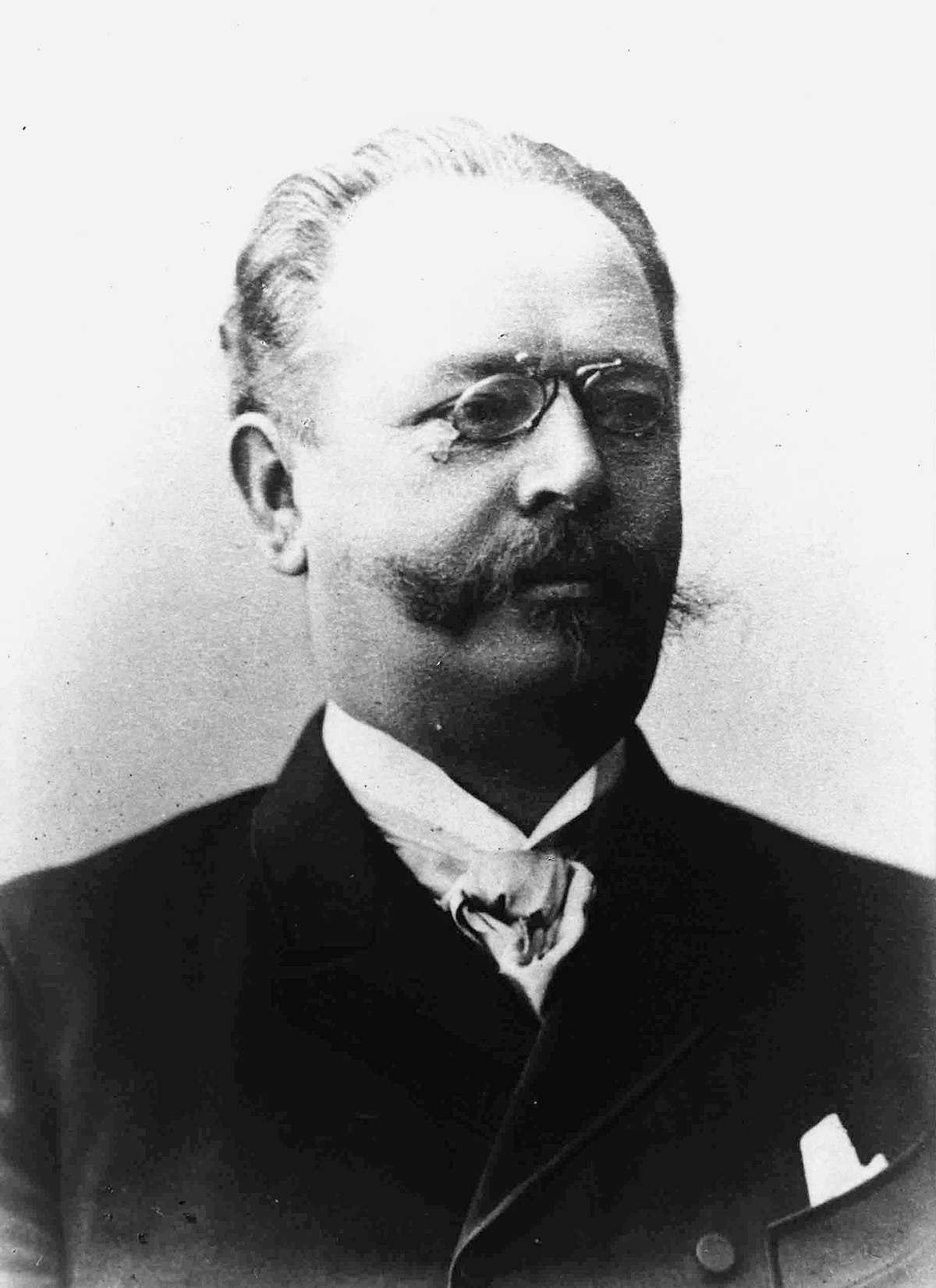
Heinrich Ernst Göring: The Man Behind the Myths
A portrait of the diplomat, the husband, and the fallen idealist
In my following blog posts, I will try to take a deeper dive into the people you can read about in my book.
Heinrich Ernst Göring (Oct. 31st 1838– Dec 31st. 1913) is one of the most complex figures in German colonial history — and in my novel. He was a man who carried great ambitions, yet was repeatedly overwhelmed by circumstances he could not control. A life that began in security and education unfolded into a career marked by failed hopes, political defeats, and personal decline.
But he was also a human being of flesh and blood: a son, a student, a husband, a father — and a man who loved two women very differently, yet equally deeply.
Heinrich was born in Emmerich am Rhein in Prussia, into a family with strong legal traditions. His father, Johann Wilhelm Göring, was a jurist, and the son followed the same path. He studied law at the University of Bonn, with a period at the University of Heidelberg around 1859–1860, before earning a doctorate in jurisprudence and entering the Prussian judicial service. grokipedia.com
He worked as a district judge in Altkirch and later at the court in Metz in Alsace-Lorraine. grokipedia.com
There are no reliable sources confirming that he worked as a cartographer during the Austro‑Prussian War (1866). It is possible he had administrative duties in the region, but this is not documented in available historical records.
Ida Friederike Remy
Little survives in public sources about Heinrich’s relationship with Ida Remy, but in the universe of my novel — and in the faint historical traces that exist — she appears as his first great love. The Remy family was affluent.
Historically, we know Heinrich married later, but Ida represents the young, hopeful part of his life — before the failures, before the colony, before the decline.
Franziska Tiefenbrunn
His documented wife was Franziska Tiefenbrunn, whom he married after his time in Africa. Together they had five children, including Hermann and Albert Göring. Academic Dictionaries and Encyclopedias
Franziska became both his support and his tragedy. In his later years, she became the mistress of his benefactor, Hermann Epenstein — an event that contributed to Heinrich’s deep personal and emotional collapse.
In 1885, Heinrich was appointed the first Reichskommissar (colonial governor) of what was then called German South West Africa (today’s Namibia). Wikipedia
What he tried to achieve
He signed a protection treaty with the Herero chief Maharero. Wikipedia
He attempted to establish an administration in Otjimbingwe. grokipedia.com
He sought to create stability between the Herero and the Nama, two groups in conflict.
So why did he fail?
Sources agree: Heinrich had no military support, no real resources, and no ability to fulfill the promises he made.
Nama leader Hendrik Witbooi launched repeated attacks that Göring could not stop. Wikipedia
Maharero later tore up the treaty and expelled Göring from Hereroland. Wikipedia
He has been accused of building his house over a Herero burial site, likely without knowing it, but it worsened the situation dramatically. Wikipedia
A supposed gold discovery in 1887 turned out to be a deliberate hoax, likely a desperate attempt to save the colonial project. Wikipedia
In 1890, he left the colony in disgrace, having failed to create peace or stability. Wikipedia
After Africa,
Heinrich was sent as a diplomat to Haiti and the Dominican Republic (1892–1895). Wikipedia
But his health was weakened, and his career never recovered.
Physical and psychological decline
Sources describe a man who gradually lost both position and self‑respect. He became dependent on the help of his friend and benefactor Hermann Epenstein, who took the family into his castles in Bavaria.
It was here tragedy struck:
Franziska, Heinrich’s wife, became Epenstein’s mistress — a relationship that lasted for many years. This is historically documented and mentioned in several biographical sources.
Academic Dictionaries and Encyclopedias
For Heinrich, this must have been a devastating blow:
He was financially dependent on Epenstein.
He was physically weakened.
He lost control over his own home and his own family.
He died in Munich in 1913, at the age of 74.
Wikipedia
Heinrich Ernst Göring was no hero — but neither was he a monster. He was a man who tried to succeed in an era shaped by imperial dreams and political storms, yet was repeatedly overwhelmed by his own limitations and the brutality of the world around him.
He loved, he failed, he tried again — and he fell.
And that is precisely why he becomes such a compelling figure:
A human being who wanted so much, but who could not bear the weight of his own choices.