Today I am launching a new blog series in which I explore the historical events that form the foundation for the people and destinies in my novel. Some of these events may seem so dramatic or unlikely that they almost challenge credibility — which is precisely why I want to refer to historical sources and documentation along the way.
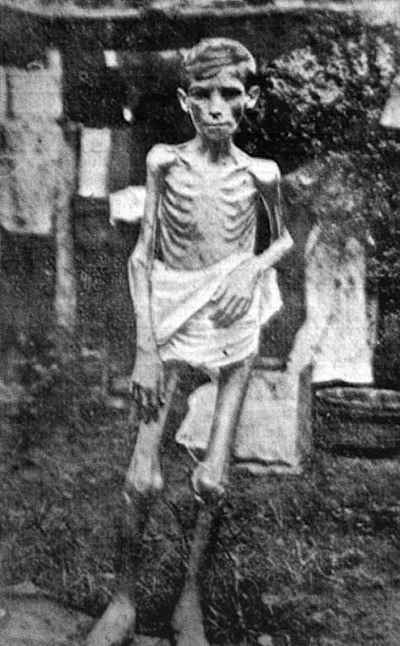
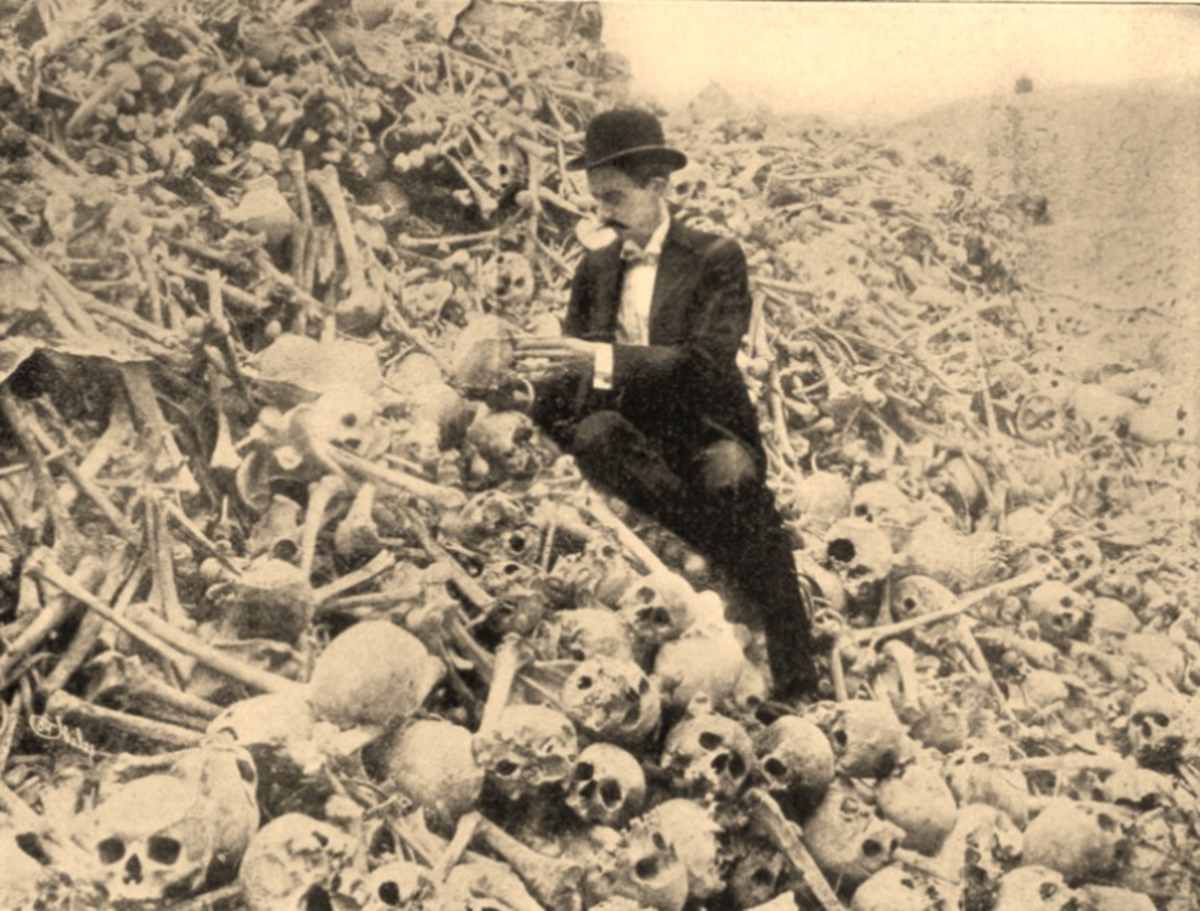
In my novel, Heinrich Ernst Göring receives a letter from his American friend Oscar, who in 1898 is working as a physician in Havana. He describes scenes of hunger, disease, and human degradation — conditions so extreme they hardly seem real. Heinrich also receives several photographs from the camps. One of them shows a man sitting in a vast pile of human skeletons as he attempts to catalogue what happened in Cuba during this period. But the question is: Did this really happen?
Yes.
And the reality was, if anything, even worse.
In 1896, the Spanish general Valeriano Weyler introduced a new strategy to crush the Cuban rebellion: reconcentration. The entire rural population was given eight days to move into military‑controlled zones around the cities. Those who did not comply risked being shot.
The purpose was to isolate the rebels from civilian support — but the consequence was a humanitarian catastrophe.
According to historical analyses, one third of Cuba’s population was forced into the camps, and between 170,000 and 400,000 people died from hunger, disease, and neglect. Wikipedia
Sources describe the camps as overcrowded, unsanitary, and lacking sufficient food. Many of the buildings were dilapidated, and epidemics spread quickly.
An American film from 1898 shows “reconcentrados” — civilians who had managed to escape the camps — standing in line for rations, emaciated and apathetic. Library of Congress
Historians refer to these camps as the first modern concentration camps, a precursor to the brutality that would appear in later eras. commons.clarku.edu
In the archives of the Spanish colonial administration, there are “bandos” — official proclamations — showing how Weyler and his successor Blanco administered this policy. These documents regulate everything from forced relocation to military punishments and offer a rare insight into how systematically the reconcentration was carried out. digitalcollections.library.miami.edu
How many died?
The numbers vary, but historians estimate that more than 150,000 civilians died as a direct result of the reconcentration policy. Some estimates go as high as 400,000 deaths, which corresponds to around 10% of Cuba’s entire population at the time. Wikipedia
In John Lawrence Tone’s extensive study War and Genocide in Cuba, 1895–1898, both the military strategies and the civilian suffering are documented in detail, including photographs of the victims — children, women, and men reduced to skeletons. Archive
Oscar’s letter — and the testimony of reality
When Oscar in the novel writes about “walking skeletons,” about people no longer able to take in food, and about an evil he never believed possible, this is not literary exaggeration. It aligns with contemporary reports from journalists, doctors, and diplomats who visited Cuba in 1897–1898.
American newspapers published photographs of starving women and children, and these images helped shift public opinion in the United States — ultimately contributing to the Spanish‑American War.
Why does this matter today?
The reconcentration camps in Cuba mark a historical turning point that would later find its most dramatic expression in Germany’s concentration camps during the Second World War and in Russia’s Gulag system.
In the decades that followed, many states adopted similar methods, such as America’s reconcentration camps in the Philippines, Britain’s concentration camps in South Africa, and Germany’s in German South West Africa.
They show how modern states could use forced relocation, internment, and starvation as weapons against civilians. They also show how ideas of “order,” “civilization,” and “control” could be used to justify systematic brutality.
And they remind us that even in the shadow of empire, there were people — like Oscar in the novel — who tried to help, document, and understand.
Documents from Cuba: Capitanía General Collection (1896–1898) digitalcollections.library.miami.edu
Historical analyses of the reconcentration policy Wikipedia
Alberto P. Marti’s research on the camps and their historical significance commons.clarku.edu
Contemporary film of “reconcentrados” from the Library of Congress (1898) Library of Congress
John Lawrence Tone: War and Genocide in Cuba, 1895–1898 Archive